The way your panels face has a real effect on how much power they make. The short version: in our part of the world, south-facing panels produce the most over the course of a full day, while west-facing panels generate more power in the afternoon and evening. The best direction for your home depends on your roof and how you use energy, and a good design makes the most of what you've got. The good news is that most roofs work well for solar, and even an imperfect direction rarely stands in the way.
South-facing: the most total production
In the northern hemisphere, the sun travels across the southern sky, so panels facing true south catch the most sunlight over the course of a day. If your goal is the maximum total power output, south-facing is the classic answer, and it's the first choice whenever a roof allows it. True south is the sweet spot, but you don't have to hit it exactly. Panels pointed anywhere in a broad range around south still produce close to their best, so a roof that faces roughly south is in great shape.
West-facing: power when you use it most
West-facing panels produce a little less over the whole day, but they make more of their power in the afternoon and into the evening. That timing matters. PG&E's rates are highest during those later hours, and that's when many households use the most power. Paired with battery storage, west-facing panels can be a smart way to cover your priciest hours with your own solar. Sometimes, aiming for what you use power for is worth as much as aiming for the most power.
East and north
East-facing panels catch the morning sun and taper off later in the day, which can suit a household that uses more power early. North-facing panels receive the least sun in the Northern Hemisphere and are generally avoided for the main array. On a mixed roof, though, a well-designed system can still put a less-than-perfect face to good use.
How much does direction really change things?
It's less dramatic than people sometimes worry. South-facing roofs are the top producers, but a roof that faces east or west usually gives up only a modest amount over the year, not anything close to half its output. North is the real outlier, producing noticeably less. So if your roof doesn't face due south, it doesn't mean solar won't pay off for you. It usually just means we design a slightly larger or smarter layout to reach the same goal. A less-than-ideal direction is a design detail, not a dealbreaker.
Direction, batteries, and time-of-use rates
This is where direction gets interesting for today's homeowner. Because PG&E charges the most in the evening, the value of your solar depends partly on when it's produced, not just how much. South-facing panels produce the most total power, while west-facing panels align better with those expensive evening hours. Pair either one with a home battery, and the picture opens up again, since a battery stores your daytime solar for the evening, no matter which way your panels face. We factor all of this into the design, so your system is built around both how much power you generate and when that power is most valuable to you.
Direction isn't the only thing that matters
Two other factors weigh in alongside direction.
- Tilt. The angle of your panels affects production, too. Here in the North Bay, a tilt in the range of a typical roof pitch works well, and we fine-tune the design to your specific roof.
- Shading. A panel in the perfect direction, but sitting under a tree or in a chimney's shadow, won't outproduce a slightly off-panel in full sun. We map the shading across your roof throughout the day so the array goes where the light is.
Real roofs rarely offer one flawless plane, and that's fine. With options like microinverters, each panel produces power on its own, so a roof with several orientations can still make great power. We design around the roof you have, not an ideal one on paper.
What about a flat roof?
Flat and low-slope roofs are common on modern, single-story North Bay homes, and they make a great surface for solar panels. On a flat roof, we mount panels on tilted racking, which lets us set both the angle and the direction independently of the roof itself. That means we can aim the panels the ideal way even when the roof underneath is level. It's one more way a thoughtful design gets the most out of your space, no matter what you're starting with.
Eichler homes are a good example, and a specialty of ours. Their flat foam roofs take a specific approach, and most solar companies won't touch them. We will. We've spent years figuring out how to properly mount solar on Eichler foam roofs without compromising the roof. If you own one, the flat roof isn't a problem. With the right racking, it's an open canvas, and we can point your panels wherever the sun is best.
We design to your roof, not a rule of thumb
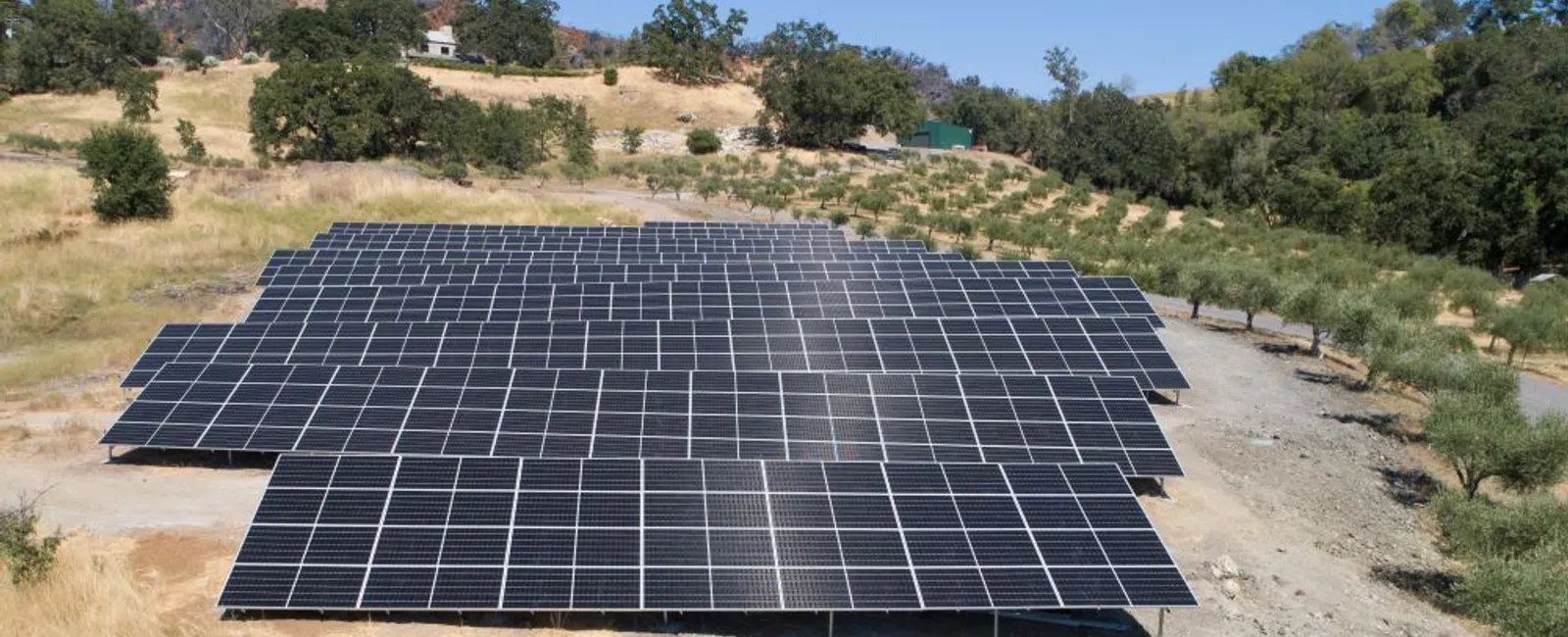
There's no single direction that's right for every home. The best layout balances how much power you want, when you use it, the shape and pitch of your roof, and any shading. During the site visit, we measure all of it and design the solar system that makes the most of your home. And if your roof isn't ideally oriented, a ground-mounted array can be pointed in exactly the right direction, another option we're glad to weigh with you.
We've been doing this across Marin, Sonoma, and Napa since 1984. We're 100% employee-owned, we've installed more than 9,000 systems, and we were one of the first companies in California to earn the state's C-46 solar license. We handle your design, permits, and installation with our own licensed teams from start to finish, so you're in good hands with SolarCraft.
Want to know the best layout for your roof? Contact SolarCraft or call Sonoma/Napa 707.778.0568 or Marin 415.382.7717.