The honest answer to how many batteries you need is: it depends on what you want them to do. There's no single number that fits every home, because a battery sized to keep a few key circuits running through an outage is very different from one built to carry most of the house. Once you know your goal, the sizing follows from it. Here's how to think it through.
Start with what you want the battery to do
Battery sizing works backward from your goal, so that's where to begin. Most homeowners fall into one of a few camps.
Keep the key circuits running in an outage. If your main aim is keeping the important things running when the grid goes down- the refrigerator, some lights, the internet, and a few outlets- you don't need much. A single modern home battery often covers those loads comfortably.
Run more of the house. If you want to keep more going during an outage- air conditioning, a well pump, an electric range, more of the home at once- you'll want more capacity, which can mean a larger battery or more than one.
Get through the evening on your own solar. If your goal is to use your daytime solar in the expensive evening hours rather than long-outage backup, sizing centers on how much power you use in that window, which we cover in how battery storage powers your evenings and outages.
Most homes land somewhere on this spectrum, and often want a bit of each.
What determines the size
A few things shape the answer once you know your goal.
- How much power you use. A larger home with heavy usage needs more storage to accomplish the same thing as a smaller, efficient one. Your PG&E history tells us your real numbers.
- Which loads you want to back up. Backing up a whole house takes far more capacity than protecting a handful of circuits. Deciding what truly needs to stay on is one of the biggest factors in the size.
- How long you want it to last. Riding out a short evening peak asks less of a battery than staying powered through a multi-day outage.
- Whether it recharges from solar. This is a big one. Paired with solar, a battery refills from your panels each day, so it isn't limited to a single charge when an outage stretches on. That daily top-up means you often need less battery than you'd think for real-world resilience.
One bigger battery or several?
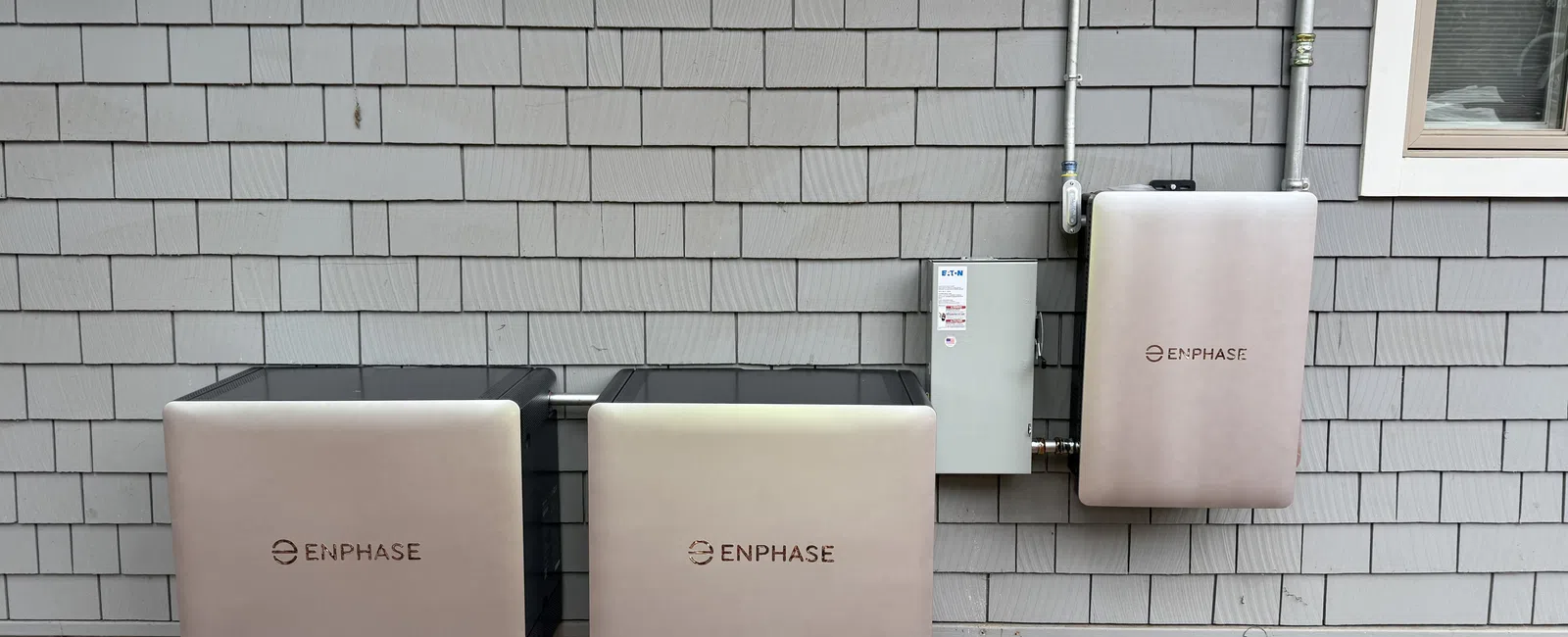
Home batteries are modular, so "how many" often comes down to reaching the capacity you need. Some homeowners get there with one larger unit, others by combining a couple. It depends on the battery platform and how much capacity your goals call for.
We install storage from Enphase, Tesla Powerwall, and Franklin, and each handles capacity and output a little differently. Part of designing your system is choosing the platform that fits your home and then adding the right amount of it, no more than you need and no less than your goal requires. Learn more about Maximize Solar Power and Savings with Franklin Whole Home Batteries.
Capacity is only half of it
There's a detail worth understanding, because it shapes the answer. A battery has two numbers that matter: how much energy it holds, measured in kilowatt-hours, and how much power it can deliver at once, measured in kilowatts. The first decides how long it can run your loads. The second decides how much it can run at the same moment.
That second number matters more than people realize when big loads are involved. Some appliances draw a lot of power the instant they switch on: a well pump, an air conditioner, an EV charger, and a battery have to supply that surge, not just the steady draw. So a home that wants to back up heavy loads may need more battery for the output, not only for the runtime. We account for both when we size your storage, which is one more reason the right number comes from your home rather than a chart.
Why guessing usually misses
It's tempting to want a simple number, but a number pulled from a chart tends to be wrong for your actual home. Two houses of the same size can have completely different usage, different loads they care about, and different reasons for wanting a battery.
That's why we size storage from your real usage and your real priorities. We look at your PG&E history, talk through what you most want to keep running and for how long, and factor in how your solar recharges the battery. The result is a battery sized to your home rather than to a rule of thumb, so you're not paying for capacity you won't use or coming up short when you need it.
We'll size it right for your home
Getting battery sizing right is one of the more valuable things a knowledgeable local installer does, because it's where a system either matches your life or misses it. We've been designing solar and battery systems across Sonoma County, Marin County, and Napa County since 1984, so we've sized storage for just about every kind of home and goal there is.
We're 100% employee-owned, we've installed more than 9,000 systems, and we're licensed as a General Contractor (B) and Electrical Contractor (C-10). We were also one of the first companies in California to earn the state's C-46 solar license, so the team sizing your battery is the same licensed team that installs and services it.
Want to know the right amount of storage for your home? Contact SolarCraft or call Sonoma/Napa 707.778.0568 or Marin 415.382.7717.