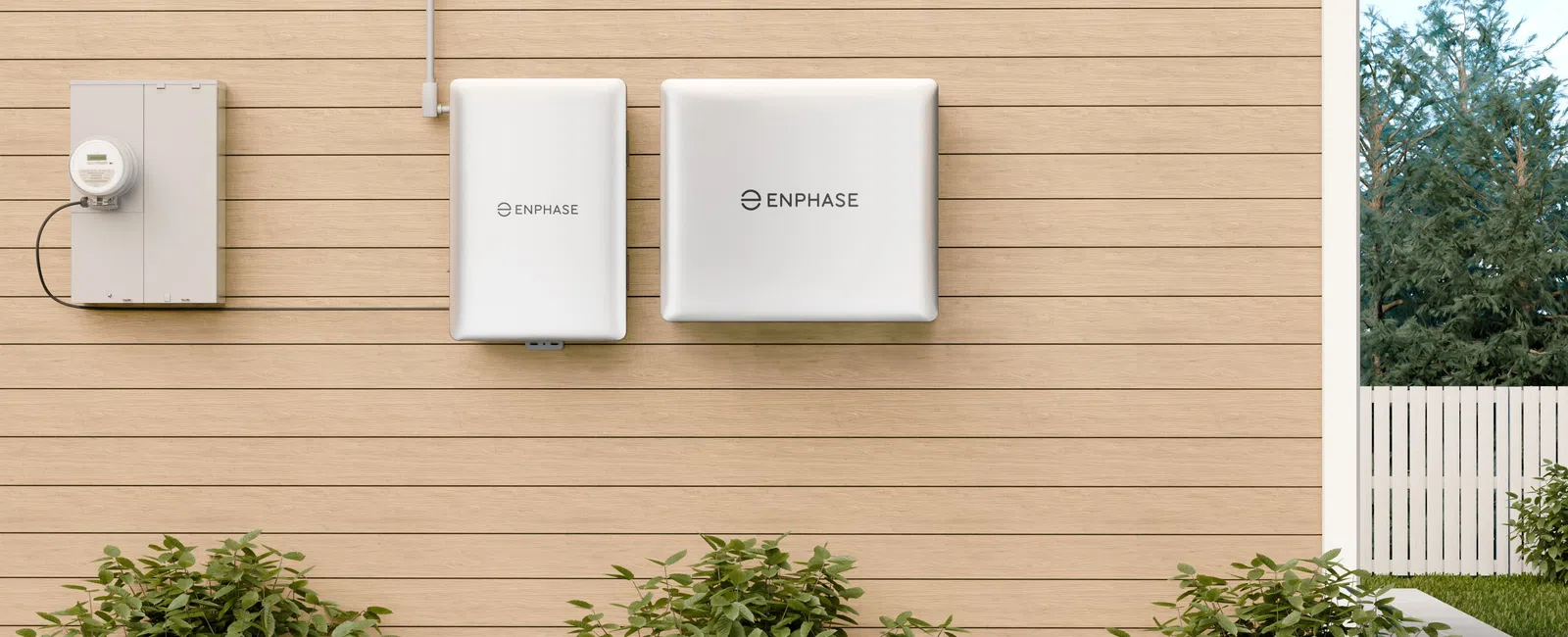
Typical microinverters, which mount under each panel, are commonly rated for 25 years, and their warranties often match that lifespan. Central (string) inverters are designed to last about 15 years. Solar panels are built to produce for 25 years or more, so an inverter replacement is a normal, expected part of owning a system, much like replacing a water heater or a roof at some point in a home's life.
It's predictable, usually covered by warranty for years, and, when the time comes, a straightforward job for an experienced local team.
What your inverter does
Your solar panels produce direct current (DC), and your home runs on alternating current (AC). The inverter converts one into the other so your home can use the power your roof makes. It also manages your system's connection to the grid and, on most systems, feeds the data you see in your monitoring app.
Because the inverter is the system's electronic heart, it has a defined service life, while the panels have no moving parts and keep producing.
How long each type lasts
Inverter lifespan depends mostly on which type your system uses.
- Microinverters sit under each individual panel, so each panel converts its own power. Each unit handles a smaller load, and microinverters are commonly rated for 25 years, with warranties that often match. That brings their expected life much closer to the panels.
- String inverters are a single central unit, usually mounted on a wall near your electrical panel. Your panels are wired together in groups, and their power runs through that one box. String inverters typically last 15 years, and standard warranties commonly cover around 10 years, with extended coverage available on many models.
Some systems use power optimizers on each panel together with a central inverter, which follows a timeline similar to a string inverter.
Our post on microinverters vs. string inverters explains how we choose the right setup for each roof.
Warranties do much of the work
Inverter warranties are one of the more reassuring parts of owning solar. With a string inverter, the warranty typically covers much of its expected life. With microinverters, it often covers nearly all of it. If an inverter needs replacing while it's under warranty, the manufacturer generally provides the replacement unit.
Keeping your installation paperwork and warranty registration on file makes any claim simple, and the coverage typically transfers to the next owner if you sell your home. Our post on solar panel warranties covers how product and workmanship warranties work together.
What helps an inverter reach a full life
Most of what determines inverter life is decided at installation. Placing a central inverter in a shaded, well-ventilated spot, sizing it correctly for the array, and wiring it cleanly all help it run cool and last. That's why we design every system around the specific home and install it with our own licensed crews, never subcontractors. Choosing quality equipment from established manufacturers, with strong warranties behind it, matters just as much.
How you'll know if something needs a look
Your monitoring app is the easiest way to keep an eye on your system. On a normal day, it shows production rising and falling with the sun and the seasons. If something changes, such as an error message, production that looks unusually low on a sunny day, or the system showing offline, it's worth a closer look.
Often the cause is minor. A system can appear offline simply because it lost its Wi-Fi connection while it keeps producing normally, and a brief error can come from a temporary grid event that clears on its own. If something persists, that's when to call us. Our post on tracking your solar production explains what normal looks like.
If your inverter ever needs attention, we take care of it
This is where working with an established local company makes the biggest difference. When an inverter needs service, our service team handles it from start to finish:
- We diagnose the issue and tell you plainly what we find, whether it's a simple fix or time for a new unit.
- We help with the warranty. If your inverter is still covered, we work through the manufacturer's process so you don't have to sort it out alone.
- We handle the replacement, install the new unit, reconnect your system, and confirm it's producing again.
- We work on any system, including systems installed by other companies and those whose original installer is no longer in business.
Because we've serviced North Bay systems since 1984, we've worked with nearly every inverter brand and generation out there. Most homeowners don't think about their inverter until it needs attention, and when it does, one call covers it.
A natural time to add a battery
If your system doesn't have a battery yet, an inverter replacement is a good moment to consider one. Some newer inverters can manage both solar and battery storage, which can make adding a battery simpler and avoid buying separate equipment twice.
A battery stores your daytime solar for the expensive evening hours, and a Backup Battery keeps your home running during outages. Our post on adding a battery to your existing solar walks through what's involved.
Solar you can count on for the long run
Knowing your inverter's expected life simply means knowing your system. Panels that produce for decades, a warranty-backed inverter, and a local team ready to help add up to a system you can rely on for years.
We've designed, installed, and serviced solar systems across Marin, Sonoma, and Napa since 1984. We're 100% employee-owned, licensed as a General Contractor (B) and Electrical Contractor (C-10), and one of the first companies in California to obtain the state's C-46 solar license.
Have a question about your inverter, or want us to take a look? Contact SolarCraft or call Sonoma/Napa 707.778.0568 or Marin 415.382.7717.