If you have a home battery, there's a setting worth understanding: your backup reserve. It decides how much charge your battery holds back for an outage versus how much it uses to power your home in the evening. Getting it right for your household is one of the simplest ways to get more out of a system you already own, and it takes about a minute to change.
What backup reserve means
Your battery does two jobs. It saves you money by covering your evening electricity use with solar you stored during the day, and it keeps your home running when the grid goes down.
Those two jobs pull in opposite directions, which is where the reserve comes in. Your backup reserve is the percentage of charge your battery keeps in the tank instead of using for everyday needs. Set it higher, and you keep more power on hand for an outage. Set it lower and more of your stored solar goes toward lowering your bill each evening.
Neither is right or wrong. It's a dial you set based on what matters most to you right now.
How to think about the tradeoff
Start with which job you care about more at the moment.
If outage protection is your priority, you may live in an area where the power goes out more often, or you rely on something at home that can't lose power; a higher reserve makes sense. You're trading some everyday savings for peace of mind.
If lowering your bill is the priority and outages are rare where you live, a lower reserve lets your battery do what it's best at: covering your expensive evening hours with your own solar.
Many homeowners land somewhere in the middle, keeping enough in reserve to handle essentials through a typical outage while still using most of their storage day to day.
When it makes sense to adjust
The nice thing about this setting is that it isn't permanent. You can change it whenever your situation changes, and there are a few natural moments to think about it.
When outages are more likely in your area, raising your reserve for a stretch gives you more cushion. When conditions settle down, you can lower it again and go back to maximizing savings.
Seasons matter too. On long, sunny summer days, your battery refills easily, so you can often run a lower reserve with little risk. In the shorter days of winter, when there's less sunlight to recharge with, some homeowners prefer holding a bit more back.
Life changes count as well. New equipment at home, a change in your schedule, or anything that shifts when you use the most power can be a reason to revisit the setting.
Your rate plan plays a part
One thing worth knowing: the best settings can differ slightly depending on which PG&E rate plan you're on. Rate plans price electricity differently through the day and treat exported power differently, so what's optimal for one household isn't always optimal for another.
For example, some customers on the Net Billing Tariff with batteries may be able to send stored energy back to the grid during late summer, in August and September, when export rates can be higher, and earn a bit of extra money. Whether that works for you depends on your plan, your system, and your usage, so it's worth asking rather than assuming. It's a good example of why a quick conversation about your specific setup can be worth more than any general rule.
A setting you can revisit, not a decision you're stuck with
It's worth emphasizing that none of this is set in stone. Unlike most choices you make when you install a system, the reserve is something you can change in seconds from your phone, as many times as you like. If you're not sure where to start, pick something reasonable, live with it for a few weeks, and see how it feels. If you never come close to using your reserve, you can lower it. If an outage leaves you wishing you had more cushion, raise it. There's no penalty for adjusting, and no wrong answer you're committed to.
Where to find your settings
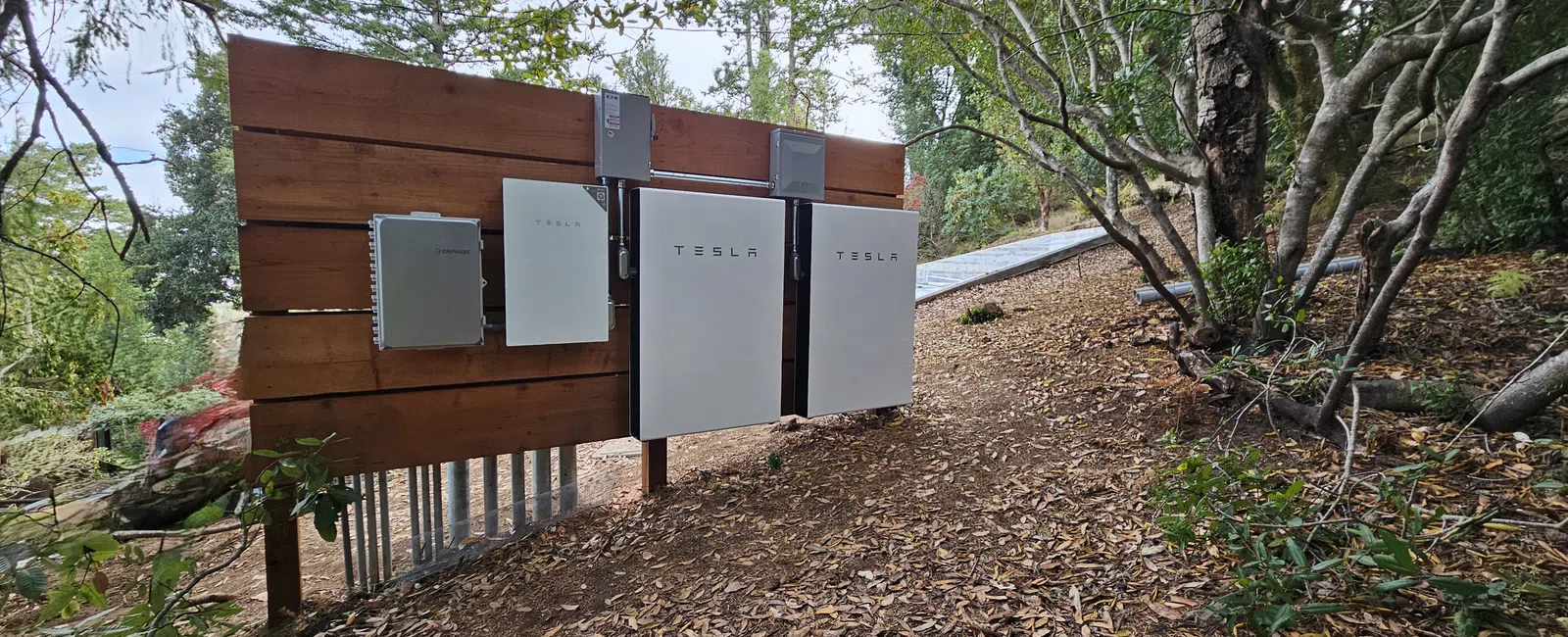
Your settings live in your battery's app, the same place you check your production and charge level. Tesla and Enphase each have their own interface, and the exact names and options vary, but the backup reserve concept works the same way across platforms.
If you're not sure where to look or what a particular option does, ask. We walk homeowners through their system when it goes live, and we're happy to revisit it anytime. Our post on how battery storage powers your evenings and outages covers the everyday value your battery delivers, no matter what reserve you choose.
Get the most from what you own
A battery is a significant investment, and small adjustments help it work harder for you. You don't need to fiddle with it constantly. Set it thoughtfully, revisit it when your circumstances change, and let it do its job.
If you'd like help thinking it through, we're happy to talk it over. We've designed and supported battery storage across Marin, Sonoma, and Napa since 1984. We're 100% employee-owned; we've installed more than 9,000 systems, and we're licensed as a General Contractor (B) and Electrical Contractor (C-10). We were also one of the first companies in California to earn the state's C-46 solar license, so you have a local team that knows your system and your options.
Questions about your battery settings? Contact SolarCraft or call Sonoma/Napa 707.778.0568 or Marin 415.382.7717.