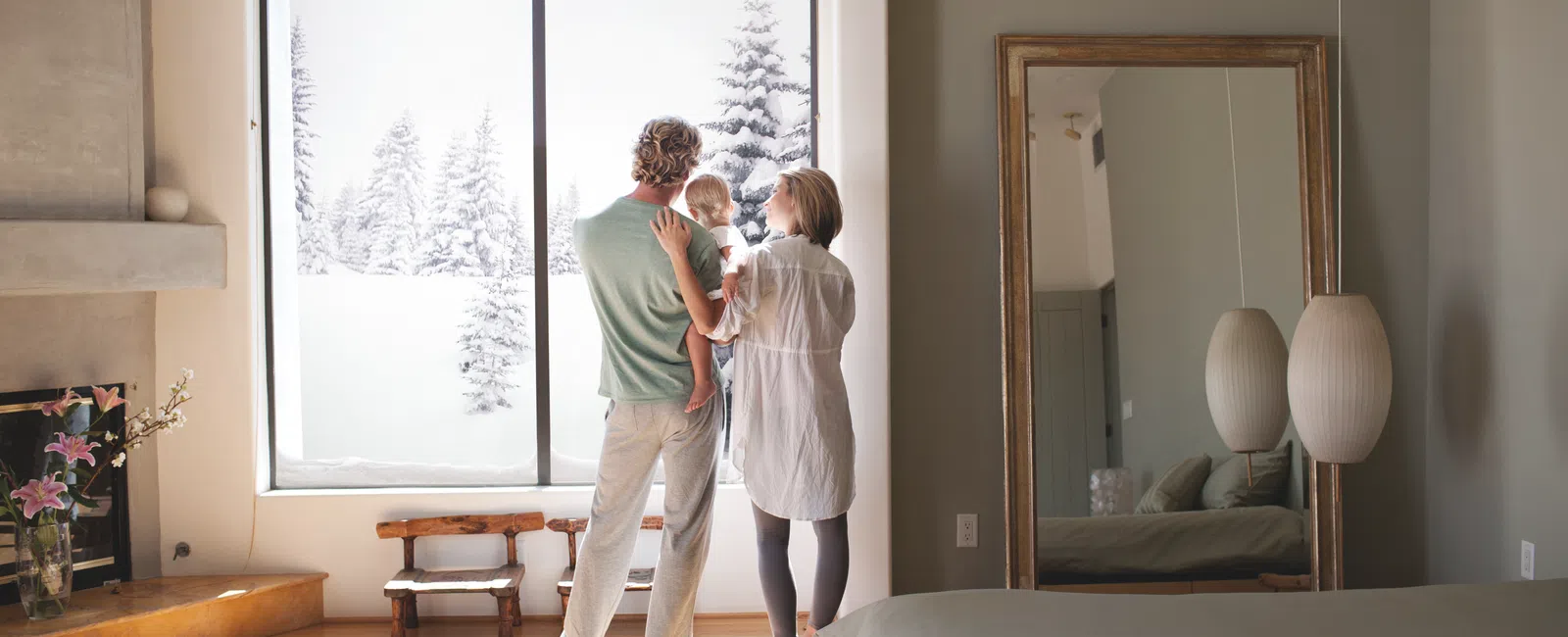
Yes, solar panels work in winter. They keep making power through the whole season, and cold weather doesn't stop them. They do produce less in winter than in summer, but that has nothing to do with the cold and everything to do with the sun, and it's already built into how a good system is designed.
Why winter production dips
Solar panels make power from sunlight, so the amount they produce follows the sun through the year. In winter, the days are shorter and the sun sits lower in the sky, so there are simply fewer hours of strong sunlight to work with. That's the real reason production drops for a few months, not the temperature.
It's a predictable, gentle dip, not a shutdown. Your panels are still producing every day the sun is up. They're just working with less daylight than they get in June, and the sun's lower path means the light hits the array at a shallower angle for part of the day. Both effects are seasonal and temporary. Come spring, the days stretch out, the sun climbs higher, and production rises right back with it.
Cold weather helps, it doesn't hurt
One thing surprises a lot of people: solar panels are more efficient in cool temperatures than in hot ones. Like most electronics, they run a little better when they're not baking. A crisp, clear winter day can be excellent for solar, because the panels are working efficiently even if the sun is lower.
So cold isn't the enemy. A bright winter day still puts real power on the board, and clear, cool conditions are some of the better ones your panels will see all year.
How much less is winter, really?
It's fair to wonder how big the winter dip is. The honest answer is that it varies by year and by home, but for most North Bay systems it's a seasonal ebb, not a cliff. Your shortest, cloudiest weeks in midwinter will be your lowest, and production climbs steadily as the days lengthen toward spring. What matters isn't any single low week. It's the total your system produces across the whole year, because that yearly total is what offsets your usage. A quiet January is expected, and a good design has already accounted for it, so it shouldn't give you second thoughts about going solar.
What about a stretch of gray days?
Every winter brings a run of overcast days, and your panels do make less when the sky is heavy. They don't stop, though. Panels still produce in diffuse light, just at a lower level, which is why even a gray North Bay winter keeps your system working. And because you're connected to the grid, any shortfall during a cloudy stretch is simply covered, either by the credits you banked in sunnier months or by the grid itself. You're never left waiting for the sun to come back. That grid connection is a big part of why a seasonal dip is a non-issue rather than a worry.
Winter in the North Bay is mild
We have it easier than most of the country here. The North Bay doesn't get the heavy snow that can bury panels in other regions, so that's rarely a concern. And our wet winters do something useful: the rain rinses dust and pollen off your panels, keeping them clean without you lifting a finger. A clean panel is a more productive panel, and winter rain takes care of it for you. If you want to clean solar panels yourself, we can provide guidance, but most find winter rain does the job well.
Your system is sized for the whole year
This is the key point, and it's why winter shouldn't worry you. When we design a solar system, we don't size it for one perfect summer day. We size it around your usage across the entire year, winter months included.
That's possible because of how solar billing works. In the sunny months, your panels often make more power than your home uses, and that surplus builds up credit with PG&E. In the darker months, when your panels make a bit less, you draw on those credits. Over a full year, it balances out. A well-designed system accounts for the seasonal swing from the start, so a quieter winter is expected, not a surprise.
In practice, this is why we spend time on your actual usage before we design anything. Once we know how much power you use across all twelve months, we can size a system that carries you through the year, with the summer surplus doing the heavy lifting to cover the winter stretch. It's a full-year plan, not a fair-weather one.
If you want to lean even less on the grid in winter, pairing your panels with a home battery lets you store your own daytime solar and use it in the evening year-round, which is especially handy when daylight is short.
Winter, in perspective
Solar is a year-round investment, not a summer-only one. Your panels work in winter, they work in the cold, and the seasonal dip is a normal, planned part of how the system performs over a year. When you look at the full twelve months, which is how solar pays off, winter is simply part of the cycle.
We've been designing solar for North Bay winters and summers alike since 1984. We're 100% employee-owned, we've installed more than 9,000 systems across Marin, Sonoma, and Napa, and we're licensed as a General Contractor (B) and Electrical Contractor (C-10). We were also one of the first companies in California to earn the state's C-46 solar license, so we know exactly how to size a solar system that performs all year for your home.
Want a system built for your year-round usage? Contact SolarCraft or call Sonoma/Napa 707.778.0568 or Marin 415.382.7717.